





Kanpur Metro Corridor-2 Gets Its First Mainline Signal at Rawatpur Underground Station as Signalling Work Speeds Up
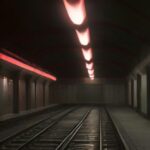
Work on the Kanpur Metro Corridor-2 has crossed another visible milestone. The first mainline signal on the CSA University–Barra-8 line has been installed at the underground Rawatpur station, and signalling equipment is now being fitted across the first five stations of the stretch, from CSA University to Vijay Nagar Chauraha.
The signal was put in place on Friday, according to the Uttar Pradesh Metro Rail Corporation (UPMRC), the agency building and running the city’s metro network. UPMRC Managing Director Sushil Kumar said the first mainline signal had been installed at Rawatpur and that all signalling-related work was being completed at a fast pace.
What the signalling package includes
The Kanpur Metro Corridor-2 is about 8.60 km long. On the first five stations alone, the plan provides for a total of 25 signals. Of these, 14 will be placed in the underground section between Rawatpur and Double Pulia, six at CSA University station and five at Vijay Nagar Chauraha station.
Alongside the signals, the corporation will install 12 point machines and 69 axle counters. Point machines move the movable rails at a junction so that a train can be shifted safely from one track to another. Four such machines each are planned at CSA University, Rawatpur and Vijay Nagar Chauraha. Axle counters, on the other hand, are small but vital devices that count the wheels entering and leaving a track section and tell the control system whether that section is occupied by a train or is clear.
For emergencies, 15 Emergency Stop Plungers (ESPs) will be fitted on the corridor, three at each station. An ESP allows staff to halt an approaching train at once if something goes wrong on the platform or the track. Three of these plungers have already been installed. Five Electrical Key Transmitters (EKTs), used to safely hand over control of points and track sections during maintenance, are also part of the package.
Why signals matter for a metro line
Signalling is the nervous system of any metro. Modern metro lines run trains a few minutes apart, and it is the signalling and train-control system that keeps a safe distance between them, sets the route at junctions and stops a train automatically if the driver misses an instruction. Without a fully tested signalling network, a line cannot get the safety clearance it needs before passengers are allowed on board.
That is why the installation of the first mainline signal is seen as a turning point. It shows that the corridor is moving from the heavy civil phase, which involved tunnelling, station boxes and viaduct construction, into the systems phase, where the equipment that actually runs trains is put in place.
Track, third rail and technical rooms
The signalling work is running side by side with other systems work on the Kanpur Metro Corridor-2. According to the UPMRC chief, technical rooms are being built at the stations and their finishing work is in progress. Track laying, third-rail work for power supply, electrical systems and signalling are all being taken up together.
Teams are also laying optical fibre cables, indoor and outdoor cables and junction boxes, along with train radio equipment that links running trains with the control centre. These networks carry the data that signals, axle counters and point machines need to talk to each other and to the operations control centre.
Only last week, the corporation had cast the first scissor crossover on the elevated viaduct near Vijay Nagar Chauraha. A scissor crossover lets trains switch between the two parallel tracks in either direction, which is important for turning trains back and for keeping services running during maintenance or a breakdown.
What it means for Kanpur commuters
The second corridor is meant to connect the agricultural university area in the north with the dense residential belt of Barra in the south. Its route passes through some of the most crowded parts of the city, including Rawatpur, the Kakadeo coaching hub and the Vijay Nagar industrial and market belt. Daily commuters, students and traders on these roads currently depend on autos, e-rickshaws and buses and face long traffic jams, especially at the Rawatpur crossing and around Double Pulia.
Once the line is opened, it is expected to cut travel time between north and south Kanpur sharply and ease road congestion on these stretches. It will also link up with the city’s first corridor, which already carries passengers between IIT Kanpur and the central parts of the city, giving residents of Barra and nearby areas a direct metro connection to the rest of the network.
Officials have not announced a fresh opening date for passenger services on the new line. The next steps will include completing the remaining signals, testing the equipment section by section, trial runs of trains and, finally, the statutory safety inspection before the corridor can be thrown open to the public.
For now, the red and green lights coming up inside the Rawatpur tunnel are a sign that Kanpur Metro Corridor-2 is steadily moving towards the day trains start running on it.